Gardening Services in Staines

Gardening Services in Staines should feel practical, tidy and well matched to the way each outside space is used. Our work covers regular upkeep, one-off clearance, hedge trimming, lawn care and broader garden improvements where the layout needs a clearer finish. Whether the aim is to keep paths and beds under control or to reshape the garden for easier maintenance, the service is built around consistent, workable results rather than unnecessary extras.
We support homes and commercial grounds with a careful, methodical approach to outdoor maintenance. That can include cutting grass, reducing overgrown growth, removing waste from clearance work and improving the overall presentation of the site. If you want a simple starting point, you can request a quotation and outline the work you need. For general service details, our services overview gives a useful summary of the kinds of garden work available.
As a local gardening service, we aim to keep the process straightforward. Some customers need repeated visits to maintain a neat standard through the season; others need a single visit to restore order after a period of neglect. The right plan depends on the size of the space, the amount of growth, the type of planting and the finish you want. We can help you decide what to include, then shape the work into a clear and manageable scope.
Regular garden maintenance and seasonal care
Ongoing garden maintenance is often the simplest way to keep a property looking cared for without letting small jobs build into major ones. In practical terms, that can mean routine cutting, edging, light weeding, pruning within sensible limits and keeping borders from becoming untidy. For many gardens, the main benefit is consistency: once the basics are under control, the rest of the space is easier to enjoy and easier to plan around.
Our garden maintenance service is suited to plots that need regular attention rather than a single dramatic change. The work can be paced around the condition of the garden and the time of year, so delicate planting is treated differently from vigorous growth. If you are comparing options, think about whether the site needs a repeating schedule, a one-off tidy-up or a mix of both. That choice usually makes the quotation clearer and the finished result more predictable.
Seasonal care also helps when planting areas, access routes and lawns all need slightly different handling. A lawn may need a clean cut and sharper edges, while shrubs may only need selective reduction or shaping. Beds can be kept manageable with sensible weed control and light border work, but not every garden benefits from the same routine. A good maintenance plan respects those differences and keeps the work focused on the parts that matter most.
Lawns, hedges and visible edges

Lawn mowing is often the most visible part of a garden service because it changes the overall impression of the site so quickly. A neat lawn needs more than a pass with a mower: the height should suit the grass type and season, the cut should be even, and the edges should be finished so the lawn meets paths, beds and fence lines cleanly. On properties with larger or awkward areas, attention to access and turning space can matter just as much as the cut itself.
Hedges and boundary planting also shape how a garden feels. Our hedge trimming work is designed to reduce overhang, restore a cleaner outline and keep growth from becoming unruly. Some hedges need a simple tidy-up, while others require more careful reduction to balance appearance with healthy regrowth. It is often best to decide whether the aim is a strict shape, a softer natural form or a controlled reduction across the whole length.
For spaces where lawn and hedge work go together, a single visit can often improve the overall finish more efficiently than treating each element separately. The key is to match the scale of the task to the condition of the site. If the grass is long, the hedge is uneven and the edges have been lost, the job may need extra time for cleanup and waste removal. Clear boundaries and clean lines usually make the biggest visual difference.
Clearance, overgrowth and bulky garden waste
When a garden has been neglected, the work often starts with clearance rather than routine trimming. Overgrown areas can hide paths, make planting beds hard to access and leave the whole space feeling smaller than it is. Our garden clearance service is suitable for spaces that need a reset, whether the issue is dense weeds, cuttings, fallen material or general untidiness that has built up over time. The work is planned around what is actually present, not around a fixed formula.
Clearance jobs can vary a great deal. One garden may only need light cutting back and removal of loose debris, while another may involve thicker growth, tangled stems or accumulated waste from a longer period of poor upkeep. We look at what can be removed safely, what should be trimmed rather than pulled out, and what needs to be separated for disposal. That helps the finished result feel ordered rather than simply stripped back.
Where clearance is tied to a broader tidy-up, it may sit alongside mowing, hedge reduction or simple border reshaping. It can also be the right first stage before later improvements, because it reveals the structure of the space more clearly. If you are unsure how much work the garden needs, it is sensible to describe the current condition plainly and ask for the most appropriate scope rather than assuming everything must be done at once.
Landscape gardening and practical layout changes

Landscape gardening is usually about making an outdoor space easier to use as well as easier to maintain. Our landscape gardening work can support new planting arrangements, boundary improvements, better use of paths and more coherent planting structure. The emphasis is on practical changes that suit the available space, the style of the property and the level of maintenance you are happy to keep up in future.
Some gardens benefit from small but meaningful changes rather than a full redesign. That might include reshaping beds, clearing a tired area, improving access or simplifying the planting so the garden feels less cluttered. Other spaces need a more complete refresh, especially when previous features have reached the end of their useful life. In either case, it helps to think about the garden in layers: hard surfaces, planted areas, screening and the amount of effort needed to preserve the result.
Landscape gardening is strongest when the plan fits the way people actually live with the space. A patio border that is too narrow, a path that is awkward to maintain or a planting scheme that needs constant intervention can all become frustrating. A sensible design keeps visual order while staying realistic. Good layout choices can reduce maintenance without making the space look bare or unfinished.
What to include when asking for a quotation
When you request a quotation, the clearest estimates usually come from a brief description of the current state of the garden and the result you want. It helps to say whether the work is one-off or recurring, what parts of the garden are included and whether waste needs to be removed. If there are access limits, gates, narrow side passages or delicate features, mention those too, because they may affect how the job is planned.
A useful enquiry often includes a short list such as: lawn cutting, hedge trimming, border tidy-up, clearance of cuttings, light pruning or reshaping of a particular area. You do not need to write a full plan; a concise summary is usually enough to show what matters most. If you have a preferred time frame, that can also help, especially when the work involves more than one part of the garden or when plants may need to be left in place rather than removed.
- State the main task or tasks.
- Say whether waste should be taken away.
- Mention anything awkward about access or layout.
- Note if the work is a one-off or part of a routine.
Dealing with neglected plots and overgrown sections
Some gardens need more than a tidy finish; they need careful reduction of growth so the space becomes usable again. Overgrown sections can include long grass, self-seeded plants, heavy weeds and shrubs that have spread beyond their intended shape. Our approach is to work through those areas in a steady order so that each part of the site becomes manageable without losing sight of the overall result. The aim is to restore control, not to overcut everything in sight.
Not every overgrown garden needs the same method. In some cases, selective cutting and clearance are better than a complete strip-back, especially where there are plants worth keeping or nesting concerns to respect. In other situations, the most useful start is to open up paths, borders and access points before carrying out more detailed trimming. That kind of phased work can make the garden easier to assess and easier to improve further if you decide to continue.
If the site has areas that cannot be reached easily, or if the growth is thick enough to hide obstacles, the job may need to be approached with extra care. This is one reason it helps to gather basic information before work begins. Accurate information on the condition of the garden makes it easier to plan the time, equipment and disposal needed for the task.
About Staines

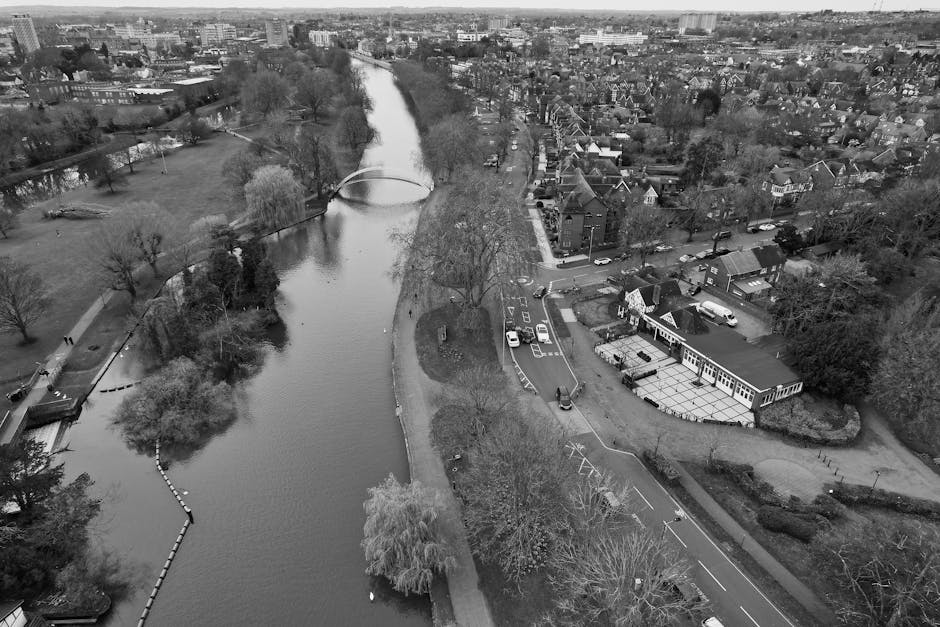
Staines, more formally Staines-upon-Thames, is a town in Surrey on a prominent bend of the River Thames, where the river has long shaped movement, trade and settlement. It lies close to the county boundary with Berkshire and has historically served as a crossing point and transport link, which is reflected in its road connections and its older core. The town centre brings together modern retail and civic functions with remnants of earlier development, while the riverside remains one of its defining physical features. The Thames path and waterside areas give walkers clear views of the river, bridges and changing light across the water, and they also link Staines to neighbouring stretches of the valley. The town’s built environment includes a mix of older domestic streets, post-war development and newer commercial buildings, which together give it a varied appearance rather than a single architectural style. Local landmarks include the riverside approaches, bridges and public spaces that sit around the centre, as well as places of worship and civic buildings that reflect different periods of growth. Staines also has a cultural identity shaped by its position within the wider south-west London orbit while retaining an independent town character. Nearby green spaces and water-facing walks provide contrast with the busier streets around the centre, and the town’s history remains visible in its name, its geography and the way the river continues to organise the landscape.
Tree work, heavier pruning and safety-led decisions
Tree lopping and removal is a more specialist part of garden care and needs careful judgment because trees affect light, access and the structure of the whole site. Some work is limited to crown reduction or branch removal where growth has become too dense, while other situations call for complete removal when a tree is unsuitable, unsafe or no longer practical to keep. The right choice depends on the tree’s condition, location and role within the garden.
Heavy pruning is not the same as routine hedge trimming. Larger woody growth may need a different cutting pattern, more attention to balance and a clearer view of what will regrow well afterwards. Where trees overhang roofs, paths or neighbouring planting, the work must be planned so that the finished shape looks intentional rather than hacked back. In some gardens, selective pruning can improve light levels and open up space without removing the tree entirely.
Because tree work often affects nearby features, it is useful to think about what lies around the trunk and canopy before arranging the job. Fences, sheds, flowerbeds and access points can all influence the method. Safety, structure and finish should be considered together so the garden remains coherent after the work is complete.
Finishing touches, waste handling and payment information
Once the main cutting or clearance work is complete, the final stage often makes the biggest difference to how polished the garden feels. That may involve gathering cuttings, removing loose material, clearing paths and checking that borders, edges and entrances look tidy. A garden can be technically maintained yet still appear unfinished if waste is left behind or the visible areas have not been given a last pass. The finishing stage is where the result starts to look deliberate.
Our service can also be paired with practical information about how work is arranged and paid for. If you want to understand broader business details before going ahead, the pricing and quotes page explains how estimates are approached, while payment and security covers the expected handling of transactions. When you are ready to move forward, the natural next step is to request a quotation and outline the garden work you want done.
For those who prefer to review supporting policies first, there are also pages about insurance and safety and recycling and sustainability. They can be useful if you want more background on how work is managed, but the most important factor remains the condition of the garden and the result you want to achieve. A clear brief, even if brief in length, usually leads to a more accurate and useful quotation.